
07.06.2026 · 4 min



Artificial Intelligence at IASA: what you study and where it leads.

Artificial intelligence is one of the most dynamic and promising fields in the world today. AI specialists combine an engineering approach with deep knowledge of mathematics and algorithms, which lets them build systems capable of learning, adapting and making decisions on their own. To succeed in this field you need analytical thinking, persistence in solving hard problems and curiosity about new technology. A love of mathematics and logical thinking is the first step into the world of AI, because it is through numerical models and algorithms that we teach machines to “think”.
Together, this knowledge lets AI engineers adapt quickly to new tools and work with cloud platforms to scale their models.
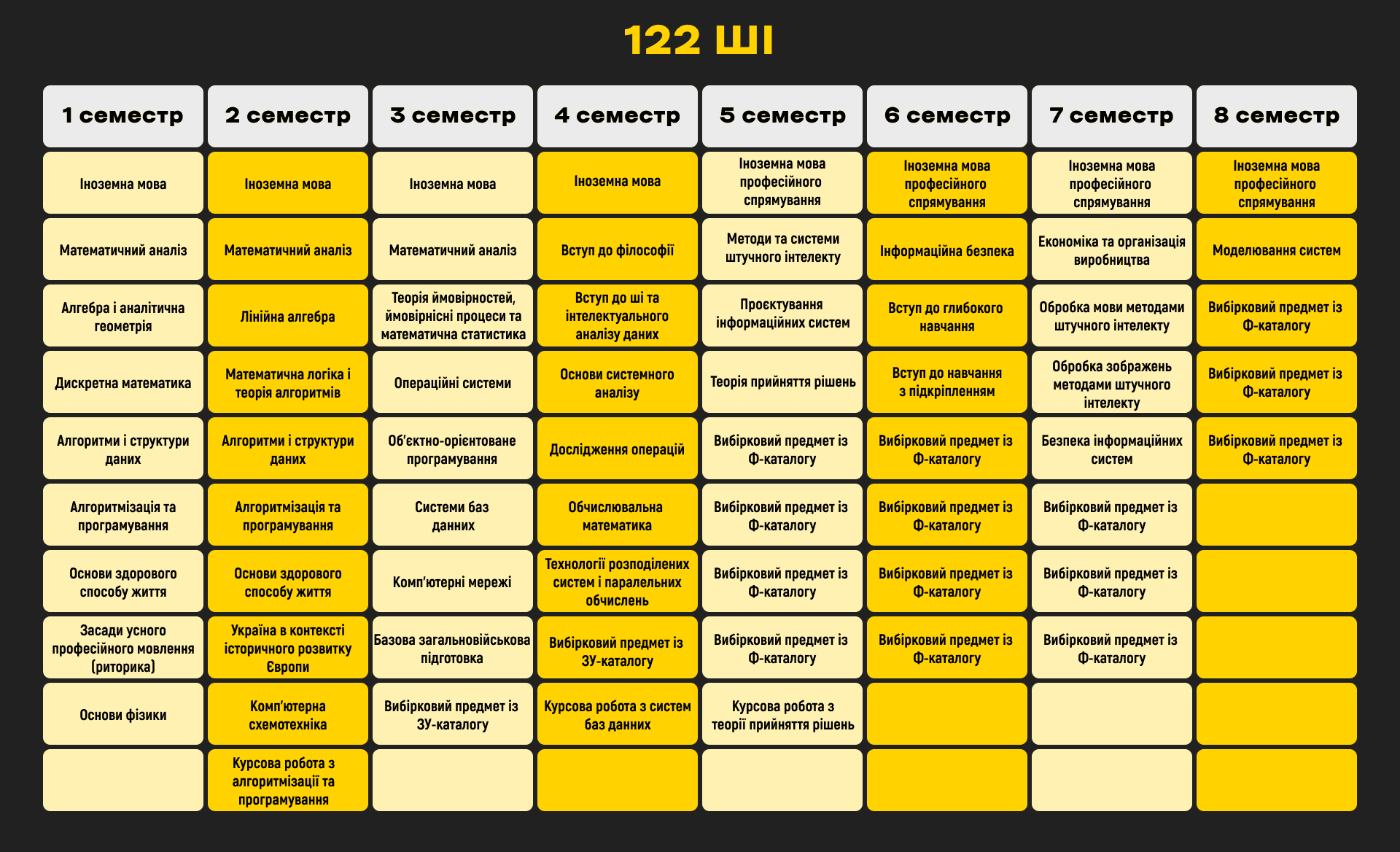
The curriculum of the “Artificial Intelligence Systems and Methods” specialty at IASA is built so that students are immersed in the fundamental subjects from year one and move gradually towards the specialised courses.
After the bachelor’s degree you can continue into a master’s program and choose a narrower focus: computer vision, NLP, AI in robotics or the Internet of Things.
The full list of subjects is given below. You can review the elective subjects here, in the ZU catalogue, and in the F catalogue.

The educational foundation of the “Artificial Intelligence Systems and Methods” specialty opens up a wide range of career paths:
On top of that, AI specialists are in demand in IT consulting, financial institutions, telecoms, government agencies and research centres.
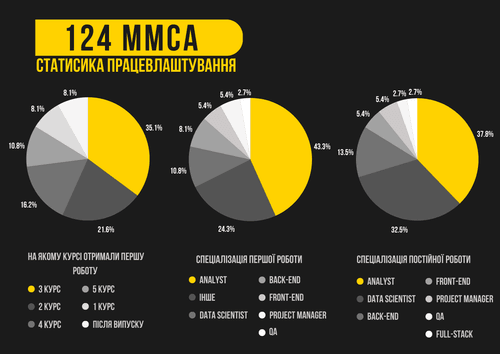
Employment statistics for our students are shown below.
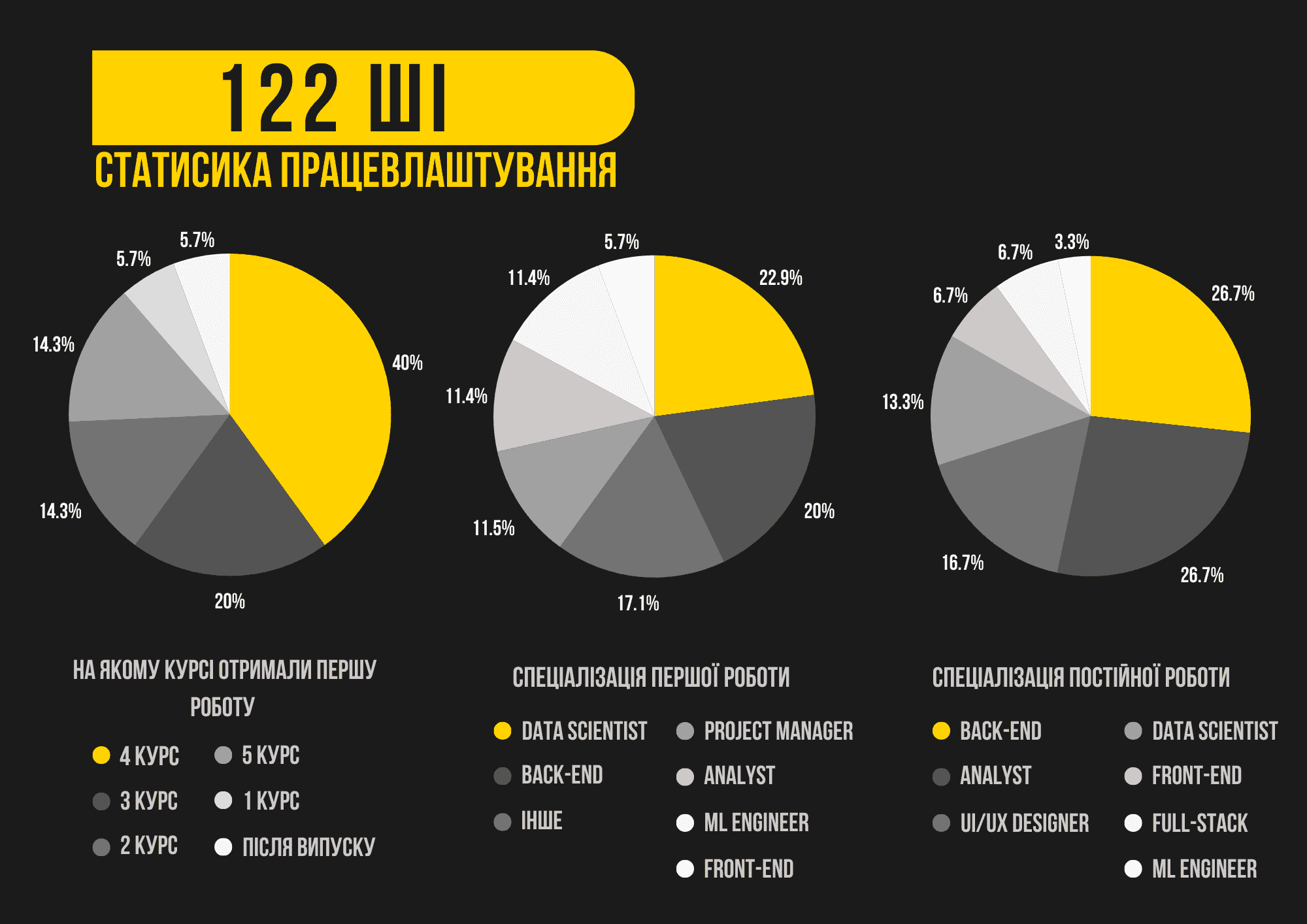
The “Artificial Intelligence Systems and Methods” specialty at IASA suits people who combine a love of mathematics and programming with a desire to work on innovative projects. If you enjoy building intelligent systems that solve real business and scientific problems, and you are ready for constant self-development and learning new tools — this program is for you. Artificial intelligence is already changing the world today, and specialists in the field will stay in demand for a long time yet.

Systems analysis at IASA: what you study and what jobs you can take.
25.02.2026 · 4 min
The hackathon from inside: the Blender rig and the night between days.
22.07.2026 · 8 min
NMT weighting coefficients: which subject moves your score most.
03.08.2026 · 5 min