
07.06.2026 · 4 min



Distributed computing at IASA: subjects and where graduates go.

The “Intelligent Service-Oriented Distributed Computing” program at the IASA faculty is a chance to try out practically every direction in IT and pick the one that genuinely excites you. The name of the program sounds complicated, but in practice it combines work on both the hardware and the software side: from studying the “iron” to building large-scale services. It is an excellent option for anyone who wants a broad base of knowledge before narrowing down to a specialisation later.
If you are ready to dive into a variety of IT technologies and are not afraid to experiment — this program is for you. There is less emphasis on mathematical training here than on the other IASA specialties, but more time goes into the practical side: programming, computer architecture and systems design.
Studying begins with a solid foundation: linear algebra and analytic geometry, which help you master spatial models and vectors and are needed for the harder topics later. Discrete mathematics unlocks the “secret key” to understanding computer architecture and low-level algorithms. The first steps in programming are taken in C and C++, which immerses you in the world of data structures and algorithms. It is a kind of starting point for any IT specialist.
A student survey showed that object-oriented programming and the courses on algorithms and data structures stand out among all the subjects. They teach you to think logically and creatively rather than simply write code.
Over the course of their studies, students also have to go deep into computer architecture and find out why some programs race along like Formula 1 cars while others move like turtles on a beach. Such detailed knowledge may not come in handy for everyone, but for professions that work closely with the hardware as well as the software it is certainly indispensable.
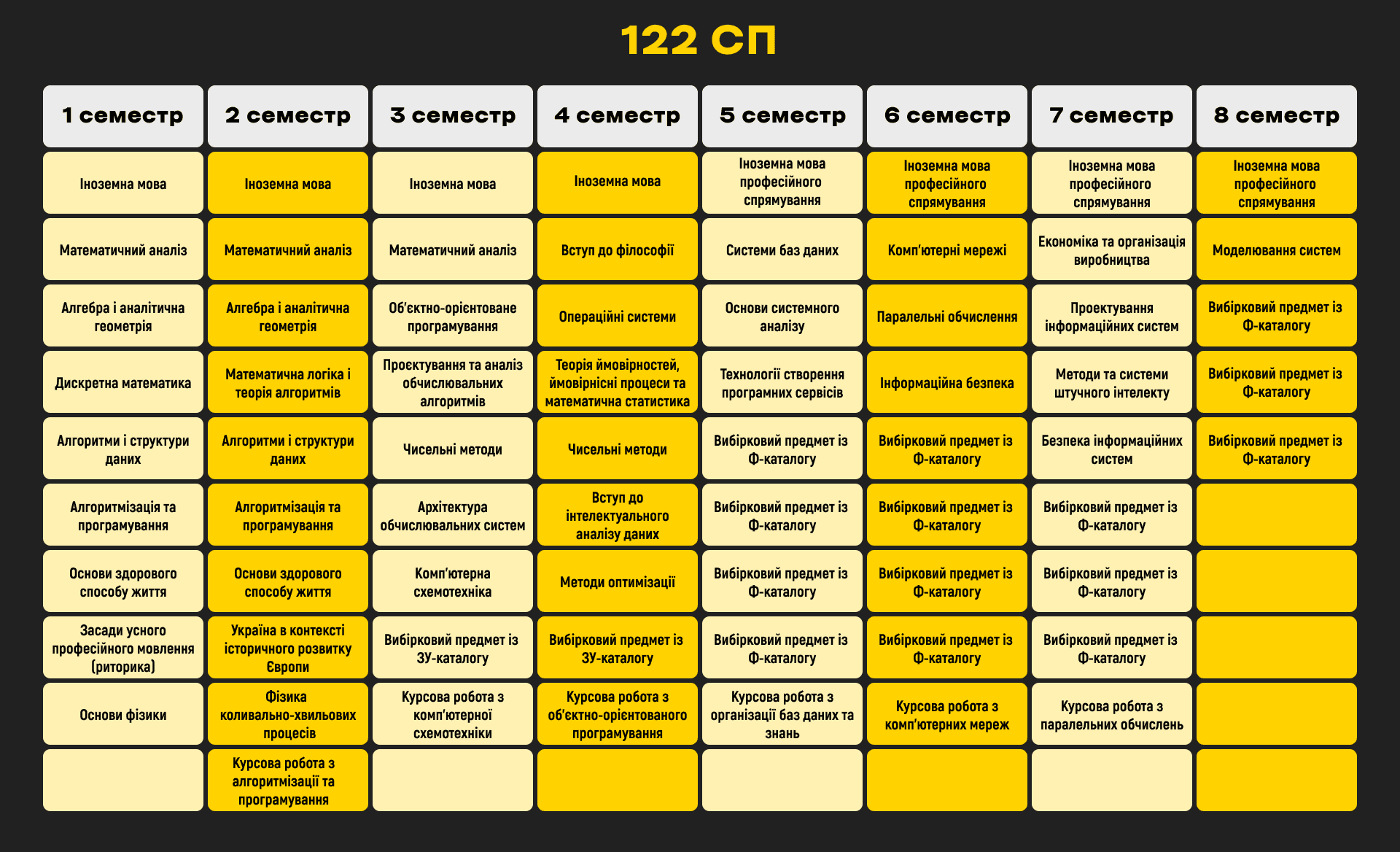
Every semester is filled with both practical and theoretical courses, and the list of electives is updated regularly, so you can always go deeper into whichever area inspires you most at the time. The full list of subjects is given below. You can review the elective subjects here, in the ZU catalogue, and in the F catalogue.

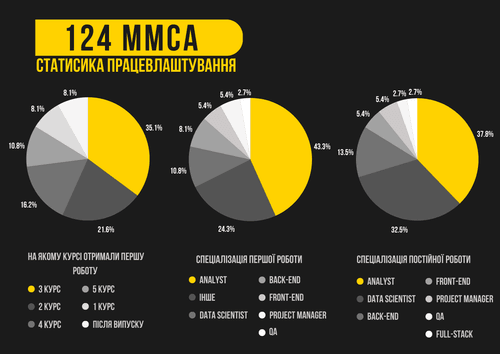
This program builds the foundation for a range of roles in the IT industry. Among the most popular positions:
Employment statistics for our students are shown below.
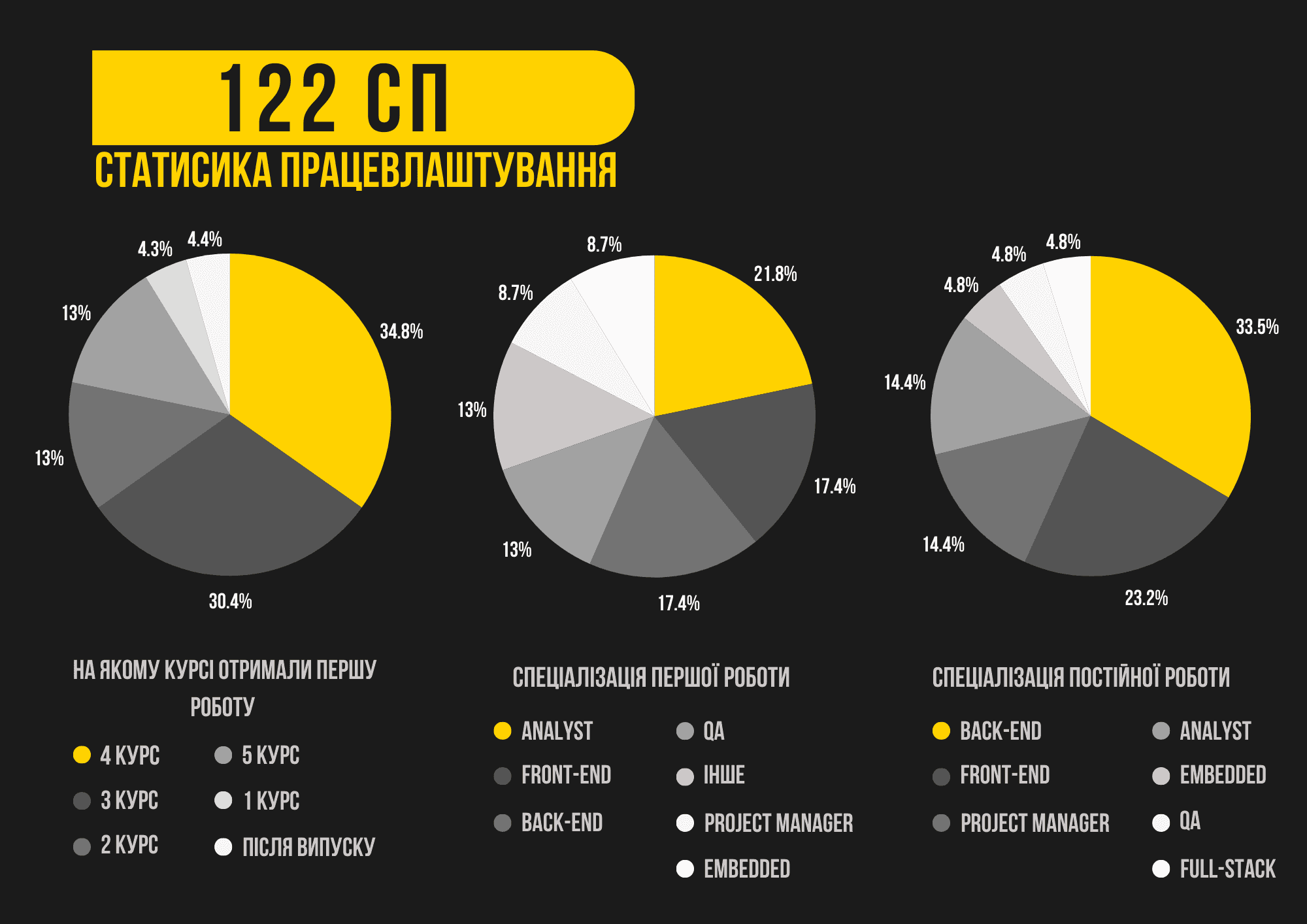
If you are more interested in programming and hands-on work with technology, and deep mathematical theory is not your main passion, systems design is the ideal start. This specialty suits people who are not yet ready to pick a narrow profile and want to explore several IT directions at once. If you can keep up a fast pace, are ready for complex assignments and want a broad set of skills — choose “Intelligent Service-Oriented Distributed Computing” and discover what the whole IT industry has to offer.
Advertising and PR: real work with content and brands from year one.
07.11.2025 · 5 min
Resources and advice for choosing a university and specialty with intent.
07.09.2026
NMT weighting coefficients: which subject moves your score most.
03.08.2026 · 5 min